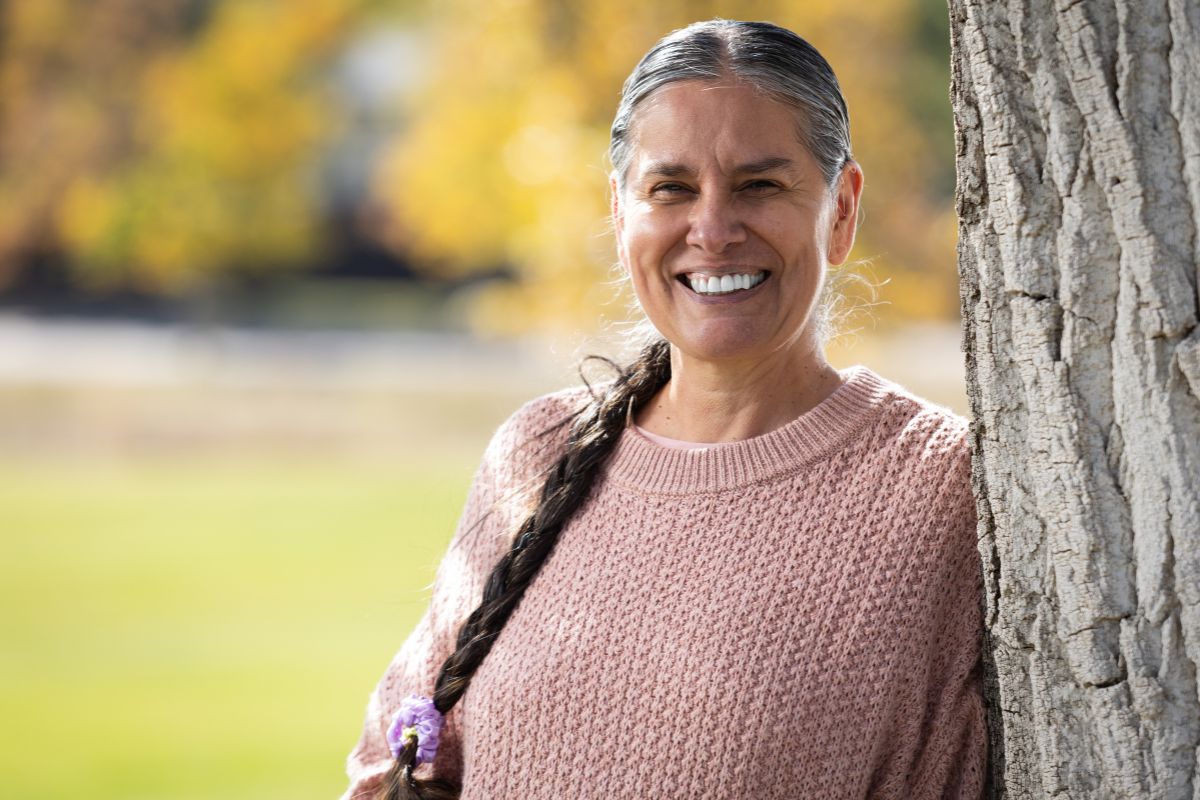
From receiving a diagnosis of chronic depression, experiencing substance use and homelessness, to achieving her goals for education, work, housing and a strong support network, the past 15 years of Ana’s life have revolved around mental health. Today, she’s a residential counselor with WellPower’s Housing Services, providing trauma-informed guidance, helping residents with daily living and supporting them by having peer-to-peer conversations – the very services she once needed herself. How did she make it here, through those years of harrowing challenges? Read on to find out.
Mental Health Challenges Connect to Everything
Before learning that she had chronic depression, Ana’s life was characterized by trauma, volatile emotions and the confusion and distress of not understanding what was happening to her. She had children when she was young and experienced abuse from her former partner. When she tried to escape for her own safety, she was forced to leave her children behind with their father.
Ana’s way of coping with the distress of her experiences and depression was to turn to alcohol, then to drugs. Her substance use eventually led to homelessness, which lasted for almost a decade.
“Mental health challenges, substance use and homelessness are all connected,” said Ana. “Mental illness and addiction feel impossible to recover from when you don’t have a place to live. I turned to substances to numb the pain from my depression, and the substance use made it so much harder to find housing and resources or to stick with any recovery programs, let alone follow through on education or finding a job.”
Ana’s experiences with chronic depression, trauma, abuse and more have given her a particularly compassionate and empathetic way of connecting with residents who are going through similar things. In turn, residents at WellPower’s recovery homes trust her and confide in her, because they know she speaks from experience when she talks with them.
Ana’s knowledge of the tools and resources available for the people she serves aren’t just from on-the-job training – she knows what to recommend because she’s used them all in her own recovery journey.
Healing isn’t Always Linear or Smooth
As Ana has looked back on her recovery journey, she’s recognized that it included a lot of bumps, obstacles and roadblocks. Her persistence and determination have allowed her to keep going.
“I don’t want people to think that I started services with WellPower and suddenly I was cured,” she said. “It took time – years of tiny steps forward, with each little bit of progress making a little more difference in my life. I still dealt with trauma. I was still experiencing addiction to alcohol and substances, as well as homelessness. It took me several years and several tries to find the right care team, the right resources and the strength in myself to actually use the tools I was learning for my own healing.”
Ana did find the right people, though. Her therapists, case managers, housing support, education specialists and more have all come from WellPower. As she learned more about her own trauma and the impacts of her depression, she was able to slowly make sustainable changes to her own behaviors and thought patterns, which positively impacted her life.
Several years into her services with WellPower, Ana received a housing voucher, which helped jumpstart her recovery from substance use. She was able to reach sobriety, and with new clarity of mind and determination, she went back to school to pursue a degree in sociology. She realized the importance of her well-being and that her life goals had to come before her unhealthy coping mechanisms, so she also stopped drinking.
“Every day that I woke up, I had to make the active choice to embrace the things I’ve learned on my mental health journey and to focus on putting one foot in front of the other,” said Ana. “One of the conditions for keeping my housing was staying clean from drugs, and after spending so many years unhoused, I didn’t want to lose that. Don’t get me wrong, though, it was still hard. I was facing my own trauma every day, and I still had a long way to go.”
Testing Her Tools
In October 2022, Ana experienced the sudden death of her long-term partner and fell into a deep grieving period. Historically, she had dealt with traumatic events by turning to alcohol or other substances. At this crucial point in her healing, though, she had to make a choice.

“One of the things I’m most proud of in my recovery is that I managed to get through [my partner’s] death without relapsing,” she said. “I walked by a liquor store every day. I would stand outside and think about how easy it would be to just go inside and buy alcohol, but I also felt that it would dishonor his memory. So I didn’t. I experienced all the pain and grief of losing him without turning to substances to numb myself, and as hard as that was, I’m so proud that I allowed myself to feel everything without turning to my old habits.”
In addition to using the coping skills she’d developed through therapy and counseling, Ana also leaned on the friends and coworkers with whom she’d formed strong relationships. Her support network provided connection, sanctuary and safety during a time when she felt most vulnerable, and that allowed her to move through her grief without feeling alone.
Take it from Ana, Mental Health Services at WellPower are Worth it
Even as a residential counselor with WellPower, Ana still uses the organization’s clinical services in her ongoing mental health care. She regularly sees her therapist over telehealth sessions and manages her depression with the help of her care team.
“If I’ve learned anything that I want other people to know, it’s this: you are in control of your care,” said Ana. “You get to decide if a clinician is the right fit for you. You get to advocate for yourself in this space. Clawing your way up from rock bottom is a full-time job, and it requires you to take a stand in decisions about your care. WellPower gets that, and staff here facilitate that. We walk beside you and we listen to you because the person whose journey matters most here is yours.”
If you need mental health support, WellPower is here to help. Click here to learn about accessing mental health services at WellPower or call (303) 504-7700. We gladly welcome Medicaid members, and we accept a range of Medicare and commercial insurance plans.
For immediate, confidential, 24/7/365 support, call, text or chat 988, the Mental Health Lifeline. In Colorado, you can also visit a walk-in center for round-the-clock, in-person help in a crisis. Denver’s walk-in center (operated by WellPower) is at 4353 E. Colfax Ave. Find the location closest to you here.
Join Our Email List
Sign up to receive our monthly newsletter, invitations to events and opportunities to support our mission.