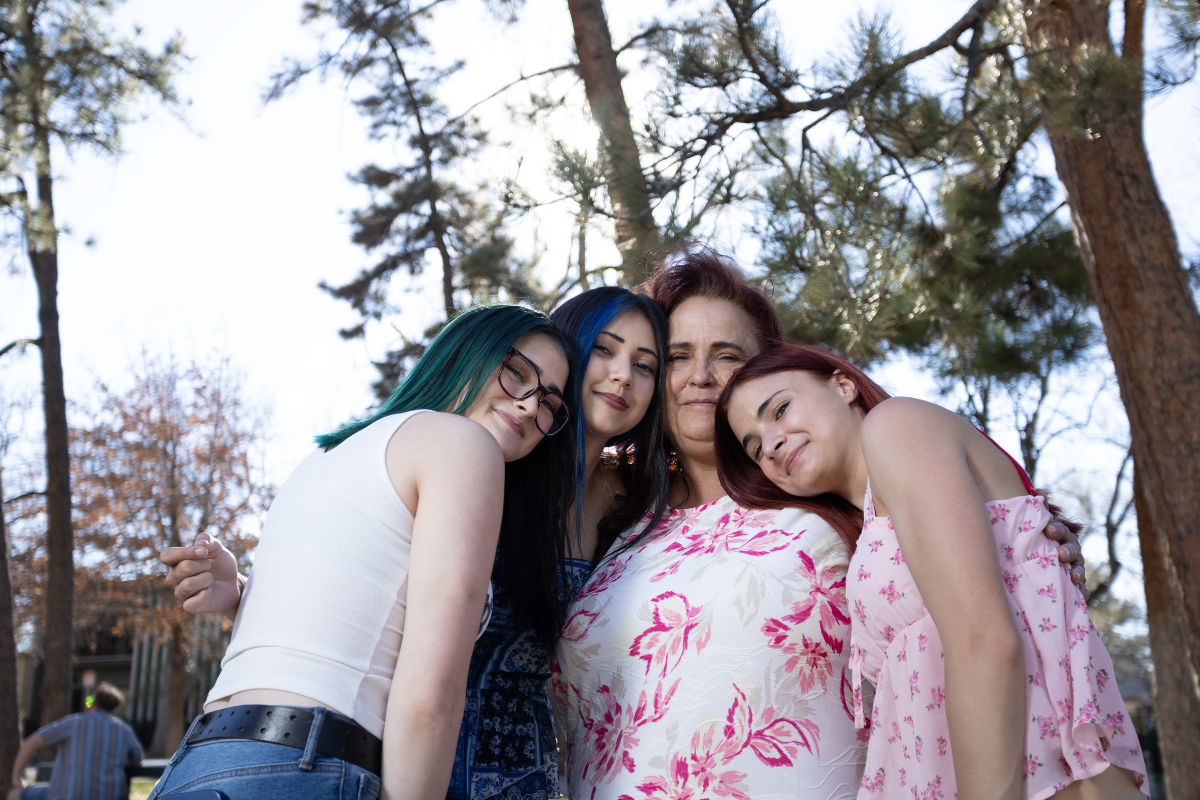
When Laura walks into WellPower’s Resource Center now, she does it with purpose. She greets people at the door, remembers routines that once felt out of reach and shares the kind of steady encouragement she once needed herself.
She started engaging with WellPower’s services around 2016 – utilizing case management support, taking classes through NextChapter and trying different vocational training roles. Along the way, she achieved what she calls her biggest milestone: six years without drugs.
For Laura, her recovery process has not been marked by a single turning point or moment. Her journey to sobriety was one of constantly trying to make the next right choice, sometimes slipping back into old habits and needing to start again. Her progress has been reinforced by staff members who noticed when she struggled, peers who shared hard-earned perspective and a set of coping skills that gradually replaced old reflexes.
Overcoming addiction, one routine at a time
Laura used drugs for much of her life, beginning in her teens, as a way to cope with her struggles with stress, anxiety and depression. For years, she told herself she could simply stop. What she did not understand then was how deeply the behavior had wired itself into the way she handled stress.
“I used to turn to drugs to handle big problems or stress in my life,” she said. “Now I don’t do that. I know how to use the healthy coping skills I learned through WellPower and that I’m capable of fixing problems without turning to drugs.”
It took time, practice and patience for Laura to develop consistency in receiving services with WellPower. For the first few years after she initially began receiving services, she stopped and re-started several times, often due to a relapse or convincing herself that she didn’t deserve the help she received. Each time she returned to WellPower, though, more determined to break her cycle of addiction and find help for her anxiety and depression.
As Laura worked on her sobriety and found a home within WellPower’s programs – particularly NextChapter and the Resource Center – she began to notice a difference in the way people responded to her when she kept showing up. In places where she once expected judgment, she found a community that treated relapse, doubt and hard days as part of the work.
NextChapter and the Resource Center are both part of WellPower’s psychiatric rehabilitation programs, geared towards helping people served with building skills, achieving education and employment goals, providing access to food and clothing and giving people served supportive community spaces to spend time.
“It feels nice to have people that don’t shame you or judge you,” she said. “I haven’t quit my job because I’m not on drugs. WellPower really helped me through that.”
Building strength and coping skills that last
WellPower’s programs gave her structure when life felt unstable. “When I stopped going to NextChapter or the Resource Center, I started to get depressed again,” she said. “My mental health is so much better when I stay consistent with going. Being around people gives me a feeling of community and hope.”
One of the most important lessons was internal. Laura said she had to change the way she talked to herself, replacing the steady drumbeat of criticism with new, kinder language. Positive affirmations became a daily practice that helped her rebuild confidence.
Laura also knows that the growth she’s achieved isn’t something she accomplished alone. She credits educators and peers who shared their own recovery stories, showing her a future she could not yet imagine. Hearing what others survived made it easier to speak honestly about her own struggles.
Employment training gave her another kind of proof of progress. In the kitchen program, it took several tries before she could complete the requirements and graduate. Later, in roles that worked with other people served, she learned to manage stressful interactions without spiraling. The longer she stayed sober, the easier work became for her – not because the tasks changed, but because she did.
Laura said it took about 10 months before she truly believed her recovery could stick. Even after she stopped using drugs, her thoughts sometimes ran down familiar tracks, telling her she could not handle what was in front of her – that turning back to drugs would help her cope with difficult emotions. Over time, that mental effort eased. She learned to recognize the early signs of a slide and to reach for support before she hit bottom.

Recovery at home, with her children watching
Laura is a mother of four. Her oldest daughter is 36 and married with three children of her own. Her younger three children all live with her and rely on her support.
Her children have watched the shift from surviving addiction to building a life of positive well-being. She makes a point of sharing good news with them, and when she struggles, she leans on the support she has at WellPower. At home, she tries to show her daughters that a single mom can work, ask for help and keep moving forward.
“Instead of being embarrassed, I talk about my feelings,” Laura said. “It’s okay to have problems, navigate through them and feel proud again.”
Laura said she wants her children to see more than the end result of her mental health journey. She wants them to see the process, including the messy parts. When she does not have the right words or when her capacity runs thin, she tells them and looks for support. She said that honesty has helped her kids feel permission to speak up about their own needs.
That openness has changed the tone in the household. Her kids tell her they are proud of her progress, especially the steadiness that comes with sobriety: working consistently, earning her own money and handling problems without retreating to her room for days.
“They tell me how great I’m doing,” she said. “They’re glad I don’t do drugs anymore and I’ve come a long way.”
Encouragement reaches beyond her household. Laura said her sisters and brother have also told her they see how far she has come. The support helps on days when motivation is low and the old voice of doubt tries to return.
In Laura’s case, support is not limited to one person in the family. Her children have attended WellPower events with her and all of them also engage with WellPower’s mental health services.
“Everybody does their own therapy with WellPower,” she said. “My youngest likes having a trusted adult outside of our household and feels more independent because of it.”
Parenting with mental health needs in the mix requires flexibility. Sometimes she does not fully understand what each child needs in the moment because their challenges are different from her own. What has changed is her willingness to say so out loud and to reach for help rather than trying to carry everything alone.
“It feels good because I feel like a weight’s lifted,” she said. “I don’t have to do it all.”

Looking ahead
Laura is still working toward a GED, taking math classes and building confidence step by step. She measures progress not only by credentials or job titles, but by the way her mind reacts under pressure. The old impulse to escape has been replaced by a plan to endure.
Her advice to others who are unsure about starting services is to keep talking about their experiences and needs, even when it feels uncomfortable. Repetition helps people get to the root of the problem and build the motivation to show up for support.
“What matters most to me now is that I’m able to live with myself,” she said. “I know I’m strong, I know I can get through hard things and I can help others who are ready to accept that help.” At home, that strength has become a stabilizing force – a reminder to her children that setbacks do not have to define a life.
Laura said she still discovers new resources and new reasons to stay engaged. “Just learning every day about something new about WellPower is amazing,” she said. “It’s a pretty cool place to be.”
Want to Access Mental Health Services at WellPower? Here’s How:
If you need mental health support, WellPower is here to help. Click here to learn about accessing mental health services at WellPower or call (303) 504-7700. We gladly welcome Medicaid members, and we accept a range of Medicare and commercial insurance plans.
Join Our Email List
Sign up to receive our monthly newsletter, invitations to events and opportunities to support our mission.