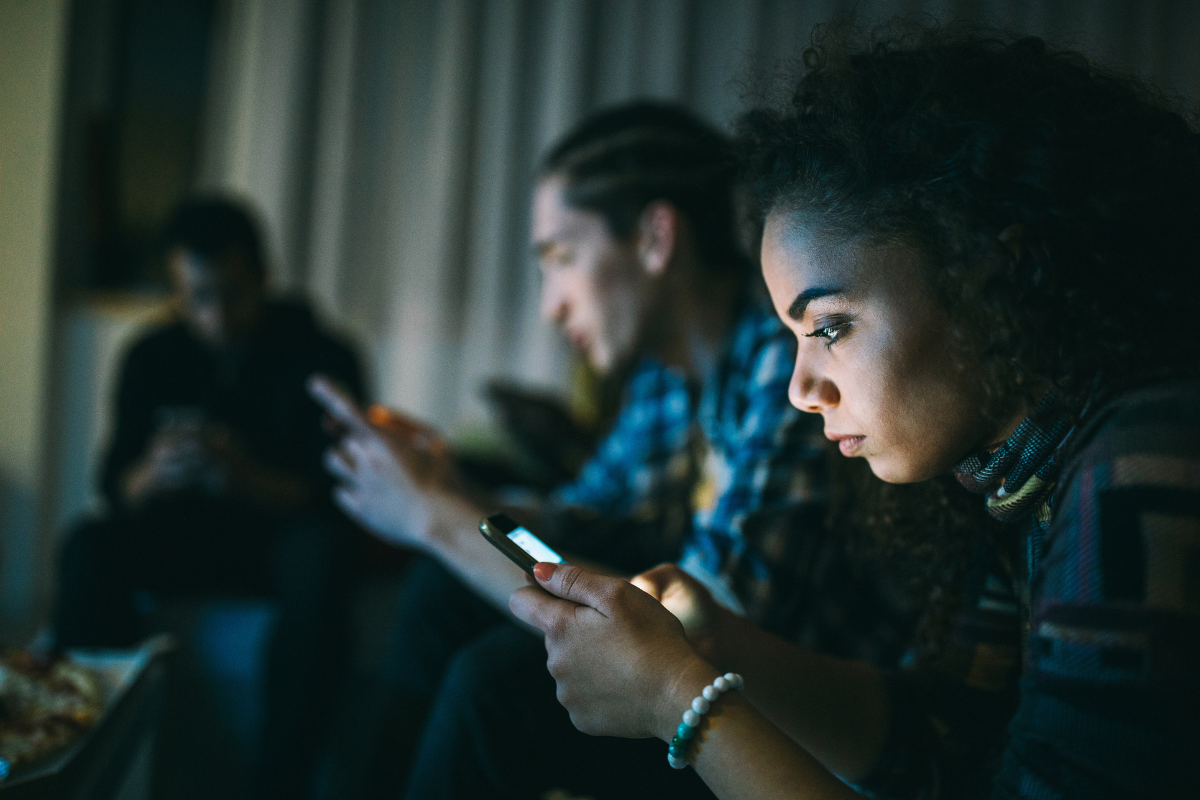
Walk into any coffee shop and you’ll see it: dozens of people physically near one another, but mentally elsewhere—heads down, thumbs moving, conversations paused for digital notifications. We live in an era of instant messaging, group chats and endless feeds. And yet public health leaders from the U.S. Surgeon General to the World Health Organization (WHO) have warned that loneliness and social isolation have become widespread and harmful.
Loneliness is subjective. It’s often characterized as the painful feeling that your relationships are not as close, supportive or meaningful as you want them to be. Social isolation is more objective—having few social contacts or limited social participation. They can overlap, but they’re not the same. What they share is impact: both are associated with higher risk of anxiety and depression and they can worsen physical health in ways that feed back into mental well-being.
The loneliness epidemic is a public health issue hiding in plain sight
In 2023, the U.S. Surgeon General issued an advisory calling loneliness and social isolation an epidemic, noting that social disconnection is linked to increased risk of anxiety and depression and a higher risk of premature death. Public reporting around the advisory—such as NPR’s coverage—highlighted a striking comparison from the evidence base: the mortality impact of lacking social connection can be comparable to smoking up to 15 cigarettes a day.
Loneliness can intensify negative thinking (“I don’t matter,” “I’m not wanted”), disrupt sleep and reduce motivation to engage in the very activities that build relationships. Over time, that cycle can raise stress and make common mental health challenges (such as depression, anxiety, trauma symptoms and substance use) harder to manage. The Surgeon General’s Advisory also summarizes links between low social connection and increased risk for cognitive decline and dementia, reinforcing what many people feel intuitively: when you’re alone for too long, the mind and body don’t simply “get used to it.”
If we’re more connected than ever, why are we so lonely?
The short answer is that connection isn’t the same as contact. Digital tools can increase the quantity of interactions while reducing the quality of relationships, especially when they replace the kinds of conversations and shared experiences that build trust. A “like” on social media can signal recognition, but it rarely provides the emotional nourishment of being known by the people close to us. When we scroll past highlights of other people’s lives, we can feel less included in our own.
Social media also encourages comparison. Even when we know posts are curated, repeated exposure to others’ “best moments” can create the sense that everyone else has a fuller social life. The gap between what we see and what we experience can translate into loneliness and shame. Clinical and public-facing explainers (such as the AMA Journal of Ethics) describe how heavy, compulsive or poorly bounded internet use can correlate with loneliness, though the relationship is complex and can differ by age, purpose and the type of online activity.
What matters is how we use platforms. Research reviews have found that “passive” use—endless watching, lurking and consuming—tends to be more associated with loneliness than active, relationship-building use (direct messaging, coordinated plans, community groups). Some experimental findings cited in the research literature suggest that when people substantially limit their social media time for a period of weeks, they can experience reductions in loneliness and depressive symptoms compared to typical use.
Phones don’t just change what we do when we’re alone; they change what we do when we’re together. When a device sits on the table during a conversation, attention becomes divided—waiting for a buzz, glancing at a screen, responding “real quick.” Those micro-interruptions can reduce depth, warmth and vulnerability. Over time, that can erode the sense of being truly seen by another person, which is one of the strongest antidotes to loneliness.
Of course, screens aren’t the only factor. The Harvard Graduate School of Education and the Surgeon General’s Advisory point to broader forces that make relationships harder to sustain: frequent moves, long commutes, economic stress, fewer community “third places” and reduced participation in civic and faith groups. Digital connection can be a lifeline when in-person options are limited. But when online life becomes the default and offline life shrinks, loneliness grows.
Colorado’s picture: loneliness, stress and the pressure points that deepen disconnection
Colorado has its own data confirming what people are feeling. Reporting based on the Colorado Health Access Survey (CHAS) found that about 1 in 5 Coloradans reported feeling lonely. Additional reporting on the same CHAS results noted that nearly 30% of Denver residents reported some level of loneliness. These numbers matter because CHAS analyzes also connect loneliness with worse self-rated health and higher levels of unmet needs.
The same Colorado reporting emphasized that loneliness doesn’t occur in a vacuum. When people are worried about rent, food, transportation and access to mental health care, it becomes harder to say “yes” to social life. People find it harder to meet for coffee, attend a group or even maintain regular phone calls. In other words: loneliness is often a symptom of systems that leave people without time, money or stability to build community.
How a digital detox can reduce loneliness (without rejecting technology)
A digital detox doesn’t have to mean disappearing. Brown University Health describes it as taking a planned break—or reducing use—so you can experience daily life with fewer digital distractions and reconnect with people more directly. For loneliness, the goal isn’t “less phone” as a moral rule. The goal is more uninterrupted attention—the kind that turns a quick exchange into a real conversation.
Here are a few detox approaches that specifically support connection:
- Turn off nonessential notifications so your attention isn’t constantly pulled away mid-conversation.
- Create “phone-free” rituals (e.g., meals, the first 30 minutes after waking, the last hour before bed) to protect time for rest and real interaction.
- Replace scrolling with outreach: when you feel the urge to open an app, text one person to set a plan or call someone you trust.
- Use social media intentionally: comment meaningfully, message directly or join a purpose-driven group, then log off.
- Track your mood for a week: note when heavy use correlates with feeling more isolated, anxious or down.
These changes work because they address the mechanisms that fuel loneliness: they reduce passive comparison, limit attention-fragmentation and free up time for activities that generate belonging (shared meals, classes, volunteering, peer groups). They can also improve sleep, another key factor in emotional regulation. At the same time, it’s important to be realistic: for some people, online communities are a critical source of support, especially when disability, caregiving or stigma limits in-person options. A healthy detox keeps the benefits of technology while reducing the parts that leave you feeling empty.
A local pathway to belonging: WellPower’s NextChapter program
For people already receiving services with WellPower, one practical way to reduce loneliness is to join something structured, recurring and purpose-driven—especially something that builds confidence and community at the same time. WellPower’s NextChapter program is designed to provide education, learning and wellness and employment training opportunities for the people WellPower serves. That matters for mental health because work and learning environments can create routine, shared goals and repeated face-to-face contact—conditions that help relationships form naturally rather than through forced “networking.”
NextChapter supports connection in several ways. It gives participants a reason to show up regularly, a place where others notice if they’re absent and a setting where conversation has an easy starting point: a class, a training goal, a resume update, a job lead. It also strengthens identity—moving someone from “I’m struggling alone” to “I’m building something with other people.” If you’re in WellPower services and you’re feeling isolated, consider asking your provider or care team how to connect with NextChapter and what supports are available to help you participate consistently.
Want to Access Mental Health Services at WellPower? Here’s How:
If you need mental health support, WellPower is here to help. Click here to learn about accessing mental health services at WellPower or call (303) 504-7700. We gladly welcome Medicaid members, and we accept a range of Medicare and commercial insurance plans.
For immediate, round-the-clock support – especially outside of WellPower’s open hours – you can call, text or chat 988, the Mental Health Lifeline. In Colorado, you can also visit a walk-in center for immediate, in-person help in a crisis. Denver’s 24/7/365 walk-in center (operated by WellPower) is at 4353 E. Colfax Ave. Other locations are listed here.
Join Our Email List
Sign up to receive our monthly newsletter, invitations to events and opportunities to support our mission.