The opioid epidemic isn’t over. In the spring of 2025, while much of the country was seeing declines in overdose deaths, the rate in Colorado did the opposite – opioid overdoses increased. This ongoing crisis still needs our attention, and WellPower is working on the frontlines to help solve it.
Something big recently happened: WellPower opened a new Walk-In Clinic for people with opioid (fentanyl, heroin, blues, prescription painkillers) addiction. Frequent readers may remember our MAT Clinic, which uses a combination of medication, therapy and peer support to help people recover from opioid use disorder. The brand-new MAT Walk-In Clinic takes this approach and shortens the time between someone’s decision to get treatment and the start of that treatment – just walk in during opening hours, no appointment needed.
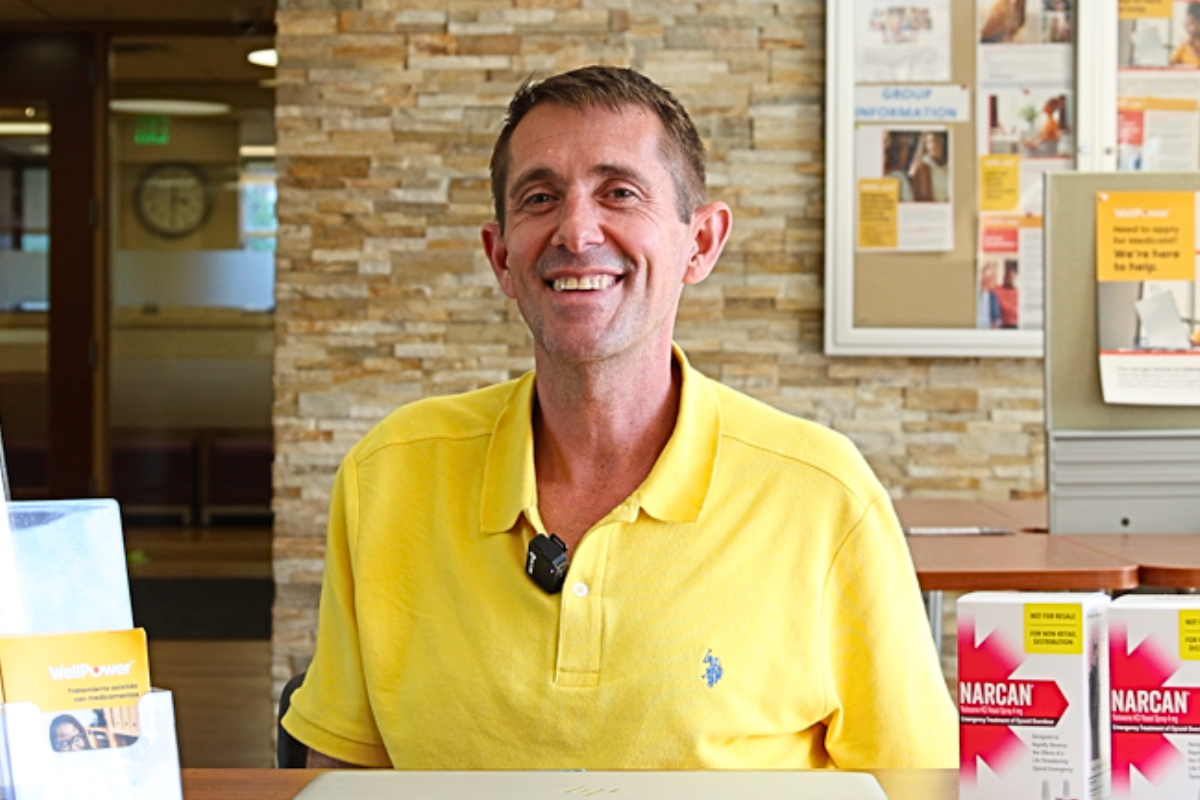
Why is this a big deal? We sat down with Jud Felder, BA, CPFS, CPRP, peer specialist II at the MAT clinic, to find out more. (You might recognize Felder from his role in the recent WellPower film noir production, “Peer Detective.” Watch the first episode here and check out WellPower’s YouTube channel for the rest.)
1. Would you mind sharing a little about your background and what brought you to this work?
Absolutely. I’m a recovering addict who suffered from meth addiction, as well as bulimia. I’ve been in recovery since 2013 and have been practicing harm reduction since before I knew what harm reduction was. I found my way to this work as a peer specialist with the MAT clinic while I was working at Trader Joe’s and going to LifeRing recovery meetings. I was exploring other job opportunities where I could serve the community that I had the most experience with and understanding for – and that was the recovery community. I thought my background of lived experience and the opportunity to use that to help people at WellPower was the perfect fit.
2. What does it mean to be a peer specialist?
It means that I can draw upon my lived experience with substance use and mental health to support other people through their own recovery. Lived experience gives me the perspective of having gone through similar experiences, or at least knowing what it feels like to deal with a certain situation. The main difference is when you’re talking to someone and say to them, “I’m a recovering addict and I’ve had a needle in my arm before, I know what that’s like and you can get through it” that tends to mean a lot. People know that you might actually know what they’re going through. It adds a whole other level of connection. If I could make it through, they realize maybe they can, too.
3. What is MAT?
MAT stands for “medication assisted treatment,” and it means that people who are suffering from opioid use disorder can get help and support through medication. For example, a lot of people will come into the MAT Clinic and they might not be in withdrawal at the time but can’t stand to be in withdrawal because it’s an excruciating experience. So, they can prevent withdrawal symptoms with the use of medications like Suboxone. For many people, that can be their ticket to engaging in longer term treatment for their addiction. It’s so hard to think long term about treatment when you’re constantly looking for the next way to prevent withdrawal. MAT can help solve that problem and make it possible to think about that next step.
4. Tell me about this new feature – the “walk-in” part – what is it, and why is it such a big deal?
It means people can get their medication faster, and that’s really big. I remember when we started the full MAT clinic and people needed meds for their withdrawal. Going through the more traditional process of a full intake and referral to the program can be difficult for people who need urgent help at that moment. The MAT Walk-In Clinic allows people to come in, meet with me and a clinical pharmacist for an assessment, and leave with a short-term supply of medication to prevent withdrawal during the same visit. That’s the main benefit: that people can get their medication faster. Shortening that distance between wanting support and actually getting medication removes a lot of barriers for people who are already dealing with a lot.
5. What kinds of medications does MAT use?
One of the main medications is Suboxone, which is a combination of buprenorphine and naloxone. Buprenorphine is a partial opioid agonist, which means it binds to opioid receptors and helps satiate opioid cravings without producing the high, and naloxone is an opioid antagonist, or blocker, so it prevents the effects of opioid drugs. (You might recognize naloxone, or the brand name Narcan, for its role in reversing overdoses) The combination of the two makes it safer than just buprenorphine on its own, because buprenorphine pills can be crushed up and used like an opioid you’d find on the street. Many people also have the option of the Sublocade shot, which is a monthly shot that’s known as a “long-acting injectable” – it’s a subcutaneous injection that slowly releases over the month, so you don’t need to worry about taking medicine every day. We don’t prescribe Methadone in our MAT Clinic, but are experienced at supporting people who want to switch from Methadone to Suboxone.
6. What makes WellPower’s MAT Walk-In Clinic unique?
The peer role is really front and center here. Other programs also have peers, but at our clinic the peer is the first point of contact and provides ongoing support throughout the entire process, including after people leave. People get a lot of support, outreach and phone calls from me. I’ll call them to see how they’re doing, and they’ll reach out to me directly if they have questions, are encountering a problem or just need support in general. I also feel like we have the walk-in model really streamlined here to balance quality clinical help with peer support. The community I’ve been able to serve here has been great, and I’ve learned a lot from the people who have come in.
7. What happens when someone walks into the Walk-In Clinic?
They come to our Recovery Center location, check in at the front desk and go to my station in the lobby to meet with me. I’ll welcome them in and talk them through the process, offering support and care needs. We’ll walk over to Daralyn’s station (our clinical pharmacist) for an assessment – getting their history, signing some consent forms and addressing immediate needs. I’ll be talking to the person and offering support, making sure they feel validated and supported throughout. Depending on their needs and whether they meet clinical criteria for MAT, Daralyn would write them a prescription for Suboxone that we can send to our onsite pharmacy across the hall. While that’s being prepared, we’ll talk with the person about other resources and supports based on what they want and need – information about our ongoing MAT clinic, how to enroll in services, other resources within the community if they’re looking for substance use care, also shelters, food pantries and other basic needs. We’ll put together a folder with all of these resources for them, and by that point their prescription is probably ready. They’ll stop by the pharmacy on their way out and leave with everything they need.
8. What would you say to someone who thinks they or someone they know might need this?
I would say they should make the time to come in and talk to us. Don’t be afraid – we’re here to help. This is a judgment free zone, and we want people to feel like they can get help. If they’re having a difficult time not using opioids, if stopping is really difficult, that might be a sign to come see us. And we’re always here to talk to family members, too – if you’re a parent or sibling and you’re worried about a loved one’s opioid use, we’re happy to talk with you about options. We want to help people in whatever stage of recovery they’re in – whether they’ve been using for 20 years or 20 days.
10. How do people find out more and get help?
Wellpower.org/mat has a lot of information. Or you can call WellPower’s general number and ask to talk to the Walk-in MAT clinic: (303) 504-7700. We’re going to start some social media content soon, too, so check out our channels. (Interviewer’s note: you can find us on Facebook, Instagram, LinkedIn and YouTube.)
Join Our Email List
Sign up to receive our monthly newsletter, invitations to events and opportunities to support our mission.