Note: this article discusses suicide. If you or someone you know needs urgent support 24/7, call or text 988 to connect with the Mental Health Lifeline.
Life After a Suicide Attempt
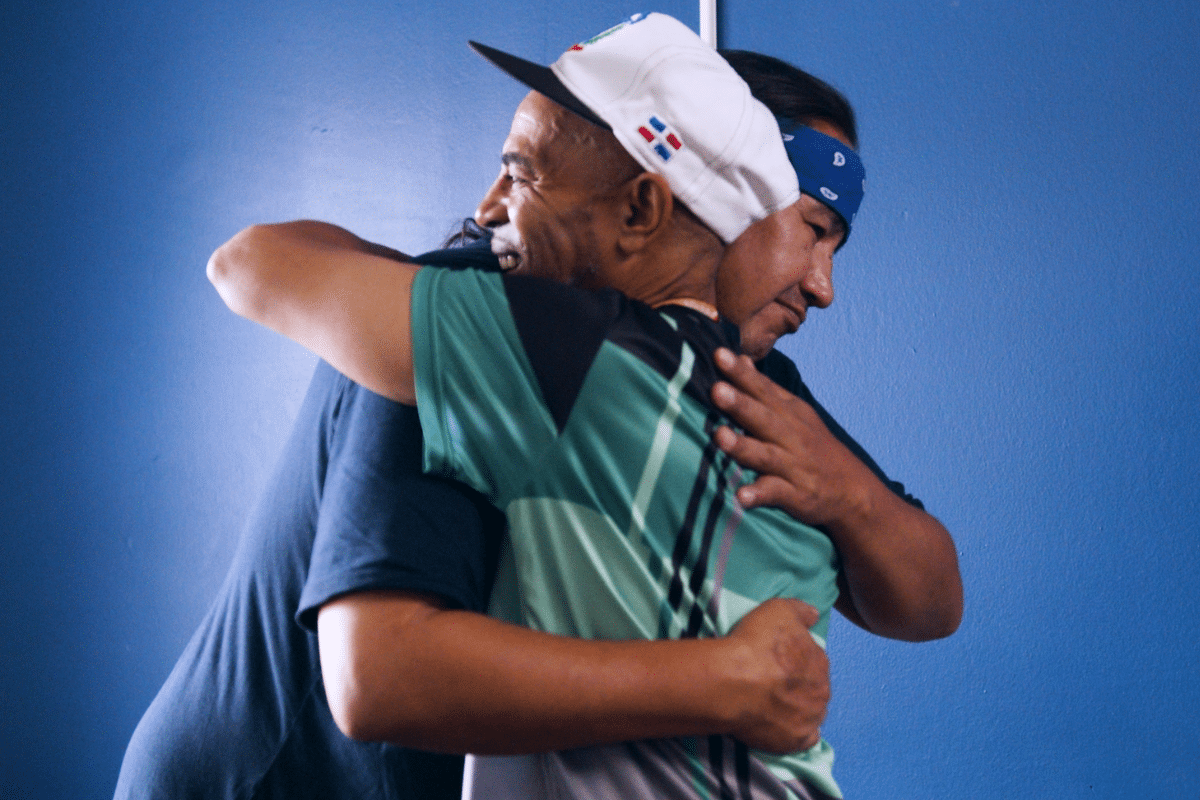
“Feeling alone, and now not being alone is the solution.” – Tomas
Surviving a suicide attempt can bring a complex mix of emotions – relief, grief, confusion, fear – and a long stretch of rebuilding that does not always look dramatic from the outside. This rebuilding looks different for every person, and even small steps can be meaningful.
September is Suicide Prevention Awareness Month. This month, we’re sharing the personal stories of Phoenix and Tomas, and what came next after life felt unbearable. Their stories are different, but they share a common thread: healing began when isolation eased and connection became possible.
The video does not present recovery as a straight line or a simple success story. It shows the quieter, braver work of staying alive and learning how to live again.
From Isolation to Connection
Tomas remembers coming home from prison to a dark place where he felt completely alone. Growing up around gang life and street violence, he had struggled to find positive role models or a community where he belonged. After returning home, the loneliness deepened: “That’s when the suicidal ideation picks up.”
For Phoenix, isolation was also central to the crisis. They describe trust issues with professionals and how difficult it can be to open up when pain has already taught someone to protect themselves. Phoenix says the isolation was “an extremely key part” of why they were suicidal. When people feel separated from others, suicidal thoughts can begin to feel like a private truth rather than a signal that support is urgently needed.
WellPower’s approach directly challenges that isolation. Through the Suicide Prevention Pathway, people experiencing suicidal ideation are connected to care, resources, and a plan for moving forward. The first message, as certified peer and family specialist and peer specialist Marchell Taylor explains, is simple and profound: “You are not supposed to do it alone.”
Peer Support After Suicide Crisis
One of the most distinctive parts of WellPower’s Zero Suicide program is the role of peer support. Marchell introduces himself not as a therapist or case manager, but as a “lived experience consultant.” Because he has experienced suicidal ideation himself, he can offer a kind of understanding that feels different to people who have learned to distrust systems or hide their deepest pain.
That lived experience matters after an attempt because shame can remain long after the immediate danger has passed. Marchell understands what it means when someone says they want to die by suicide. He also understands the relief that can come when another person does not flinch or judge, but instead validates the hurt and makes room for it to be spoken.
Phoenix says peer specialists feel more genuine. For someone rebuilding life after a suicide attempt, that genuineness can become a bridge back to trust. Peer support does not replace clinical care; it helps people use the tools they learn in therapy, groups, and daily life. It is support offered by someone who can say, in a deeply credible way, “I understand, and you do not have to be alone in this.”
Building a Plan for Safety and Hope
The Suicide Prevention Pathway gives people more than validation and encouragement, though both are critical for supporting someone’s recovery. This program creates structure at a time when life may feel chaotic or impossible to organize.
Marchell describes helping people identify risk factors, recognize protective factors, connect to resources and create a plan of action. That plan can include skill-building and reconnecting with interests that bring joy back into life.
For Phoenix, the plan led back to music. Music had always been a passion, but recovery helped it become a source of community and purpose. With Marchell’s support, Phoenix connected to music resources and found bandmates. Healing, Phoenix says, meant finding community, rediscovering passion, and reclaiming a reason to keep creating.
For Tomas, the plan looked practical and steady. He describes being in a dark place and now being employed, coming to therapy, attending groups, and having his own place. These may sound like ordinary milestones, but after a suicide attempt, ordinary really can be extraordinary. Routines and responsibilities – not to mention a safe place to sleep – can become the scaffolding of a new life.
You Are Not Alone Group Support
Tomas’ turning point also included WellPower’s “You Are Not Alone” group. Before becoming involved, he says there were times when he got tired of living and breathing. After joining the group, his suicidal ideation dropped. What changed was that he found people who understood what he had been through and what he was still facing.
The group creates what Marchell describes as a family-like setting. People share experiences, challenges, insights, and resources. They put their guards down. They learn that it is okay to breathe, okay to talk to the person next to them honestly, okay to ask for help. For someone who once believed community was only for other people, that experience can be life changing.
Tomas says the group helped him learn key skills like communication, patience, decision-making, and even vulnerability. Those skills are part of suicide prevention, too. They help a person navigate challenging situations and to stay connected when distress rises – distinct from the despair that has often been the natural response in the past. In this way, recovery becomes not a single moment of survival, but a daily practice of life with support around you.
Moving from Surviving to Thriving
What emerges from Phoenix’s and Tomas’ stories is a fuller picture of what happens after a suicide attempt. Healing means a lot more than merely staying alive. It is rebuilding trust. It is finding a reason to leave the house, a person to call, a group to attend, a song to play, a responsibility to keep, a future that no longer feels closed. It’s about hope.
WellPower’s Zero Suicide program supports that movement by combining structured clinical care with human connection. Therapists help people build tools. Peer specialists help people use them. Groups help people discover that others are carrying similar pain. Together, these supports help transform survival from an endpoint into a beginning.
Since 2024, WellPower has observed a substantial decrease in reported suicidal ideation among the people it serves, reflecting the impact of this sustained, connection-based approach.
Near the end of the video, Phoenix names the change with striking clarity: “I don’t just have to live to survive. I can live to live.” That is the hope at the center of this work. After a suicide attempt, people deserve support beyond an emergency intervention. They deserve care that helps them feel connected, valued and able to imagine tomorrow.
They deserve a community that says, again and again:
You are not alone.
How to Find Help
If you or someone you know needs urgent support, call, text or chat 988, the Mental Health Lifeline. In Colorado, you can also visit a walk-in center for immediate, in-person help in a crisis. Denver’s walk-in center (operated by WellPower) is at 4353 E. Colfax Ave. Find another Colorado location closest to you here.
WellPower offers a comprehensive range of mental health services for people of all ages and needs. Click here to learn about services at WellPower or give us a call at (303) 504-7700. We gladly welcome Medicaid members, and we accept a range of Medicare and commercial insurance plans.
Join Our Email List
Sign up to receive our monthly newsletter, invitations to events and opportunities to support our mission.