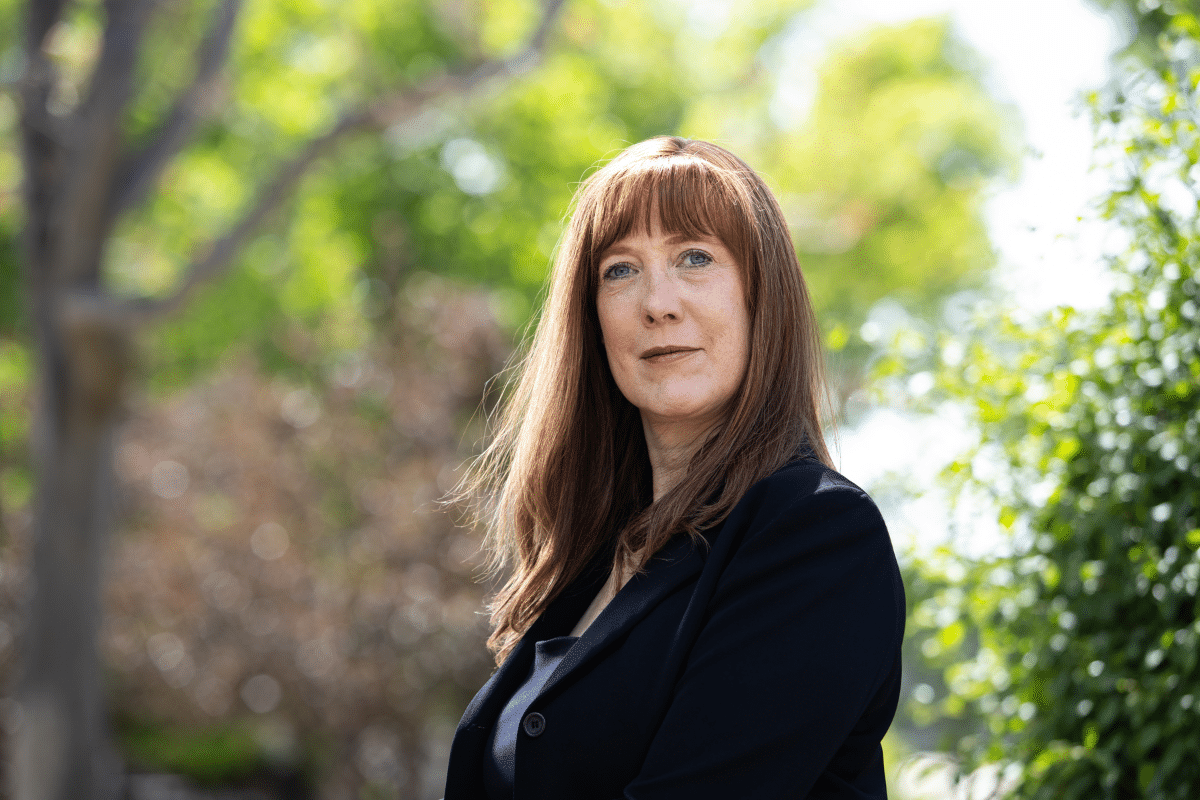
Grief can change everything. It can cloud your thinking, disrupt your routines and make even the smallest task feel impossible. At WellPower, we have the privilege of walking alongside people through many seasons of life, including the hardest ones. Jennifer knows that journey well.
After losing her mom in April 2025, Jennifer leaned on WellPower’s grief and loss group to help carry a loss that felt overwhelming.
“I felt like I was in shock when my mom died,” said Jennifer. “I was devastated for a long time after she passed. The grief felt like it took up all of my emotional space, but eventually, I was able to create more capacity around it. It’s still there, though. I think it always will be.”
Her mom’s death was followed by the loss of a client and a classmate, adding even more weight to an already devastating season. Her experience with grief and healing has shaped four powerful lessons about what it can look like to move forward after deep loss.
1. Find community and ask for help
Jennifer’s first and strongest piece of advice is simple: do not go through grief alone. She believes healing happens in connection with other people, especially people who understand loss from the inside.
That is why the grief and loss group at WellPower became such an important part of her healing after her mom died. “This group is almost like family to me,” Jennifer said. “I can be honest about what I’m carrying and what I’m feeling each time we meet.” Her support network also includes her husband, long-distance family members, some of her mom’s close friends and her loved ones from church, reminding her that support can come from many places.
Grief can make people want to pull back, but Jennifer encourages people to do the opposite. Reach out. Ask for help. Let someone know what you need, whether that is a family member, a friend or your care team at WellPower.
After her mom died, Jennifer’s psychiatrist suggested the grief and loss group, which she could attend online during lunch while working full time. “I’m so glad that he suggested that I join the group,” she said. “It’s been incredibly helpful.” For Jennifer, asking for help has opened the door to healing and ongoing support through every stage of recovery and grief.
2. Take care of yourself
Jennifer is careful to define self-care in practical, grounded terms. In acute grief, self-care is not about perfection or performance. It is about the basics.
“Self-care isn’t always about luxurious experiences or how the media portrays it,” she said. “Often, it’s the foundation of keeping ourselves healthy and safe. I had to force myself to get sleep, to eat nourishing food, to move my body. It wasn’t easy, but it was necessary for my well-being.”
After her mom died, Jennifer did not want to eat, but she pushed herself to choose foods that would support her body. She also struggled with sleep, which she knows is common in grief. Her advice is not to force yourself through it alone. If sleep is becoming a problem, talk to your provider.
“If that means asking your psychiatrist for something to help you sleep, then do that,” she said.
Grief can also affect concentration and reaction time. Jennifer remembers being warned to be extra careful while driving or crossing the street because grief can make it easier to miss things.
“In those early days, I felt more in shock than anything,” she said. “I remember driving after my mom passed away and thinking, ‘I know why I was warned to be extra careful.’ It was hard for me to pay close attention to my surroundings in the haze of devastation and sadness.”
In time, self-care also meant letting joy back in. A few months after her mom died, Jennifer and her husband adopted a rescue dog. The dog brought comfort during a deeply painful season and helped her begin creating positive experiences again. As Jennifer put it, grief may still be there, but healing can make room for life around it.
3. Love yourself how you need to be loved
Grief can bring guilt, regret and a painful chorus of “what-ifs.” Jennifer knows that well. She remembers second-guessing whether she should have spent more time with her mom before she died, even though she was deeply present. That is why one of her most moving pieces of advice is to love yourself with gentleness and grace.
For people who do not know what that means in practice, Jennifer offers a powerful guide.

“Love myself like my mom would love me,” she said. “Or how I would love my mom. That’s how I have to love myself.”
That perspective matters, especially for people living with depression and anxiety, where self-talk can become harsh and unforgiving. She also wants others to know that speaking openly about mental health can reduce stigma and create hope in times of grief.
“The only way we can reduce stigma about mental health and grief is if people talk about it,” she said. “Loving yourself in grief does not mean pretending everything is okay. It means giving yourself the same compassion you would offer someone you cherish. It means making space for tears, exhaustion, uncertainty and healing. It means not punishing yourself for being human in the middle of pain.”
4. Do not be afraid to seek mental health support
Jennifer’s story is also a reminder that grief does not happen separately from mental health. For people already managing depression, anxiety or another condition, loss can intensify symptoms and increase the need for support.
Jennifer came to WellPower in 2014 while struggling with mental illness and alcohol use disorder. She has since built a stable life in recovery, but she is clear that healing has never meant doing everything on her own.
Over the years, Jennifer has used WellPower services in different ways, including therapy, psychiatry, DBT, relapse prevention, employment support and now grief support. She says that continuity has mattered.
“WellPower has never let me down,” she said. “I’ve been able to get the help that I need at every stage of where I’m at.”
During past in-patient stays for mental health and alcohol use support, her WellPower team stayed involved and helped with discharge planning so she would not lose her connection to care.
After her mom died, her psychiatrist began seeing her more often, giving her another layer of support as she navigated intense grief. That kind of wraparound care helped Jennifer stay connected, supported and hopeful.

Jennifer says the sadness of losing her mom is still with her, but it feels lighter and more manageable than it did in the beginning. That is what hope can look like after loss. Not the absence of grief, but the ability to keep living alongside it. At WellPower, we are honored to be part of stories like Jennifer’s, where honesty, community and support create space for healing. For anyone moving through grief while also managing a mental health challenge, her message is clear. Find community. Ask for help. Care for your body. Be kind to yourself. And if you need mental health support, do not be afraid to seek it. You do not have to carry grief alone.
To get started with WellPower services, call us at (303) 504-7700 or visit wellpower.org/appointment. If you are in crisis or need help dealing with one, the 988 Colorado Mental Health Line is available for free, immediate, human support 24/7/365 – call or text 988 or live chat at 988colorado.com.
In Colorado, you can also visit a walk-in center for immediate, in-person help in a crisis. Denver’s walk-in center (operated by WellPower) is at 4353 E. Colfax Ave. Find the location closest to you here.
Join Our Email List
Sign up to receive our monthly newsletter, invitations to events and opportunities to support our mission.